Your schedule, your notes, your inbox, and controlled-substance signing — in your pocket. And for your patients: their records, their care team, and the devices they already own.
Free with every Hero EMR practice.

Not a companion app that shows you a read-only calendar. The mobile app opens the encounter, records the visit, works the inbox, and signs controlled substances — the same data, the same permissions, the same chart as the desktop EMR.
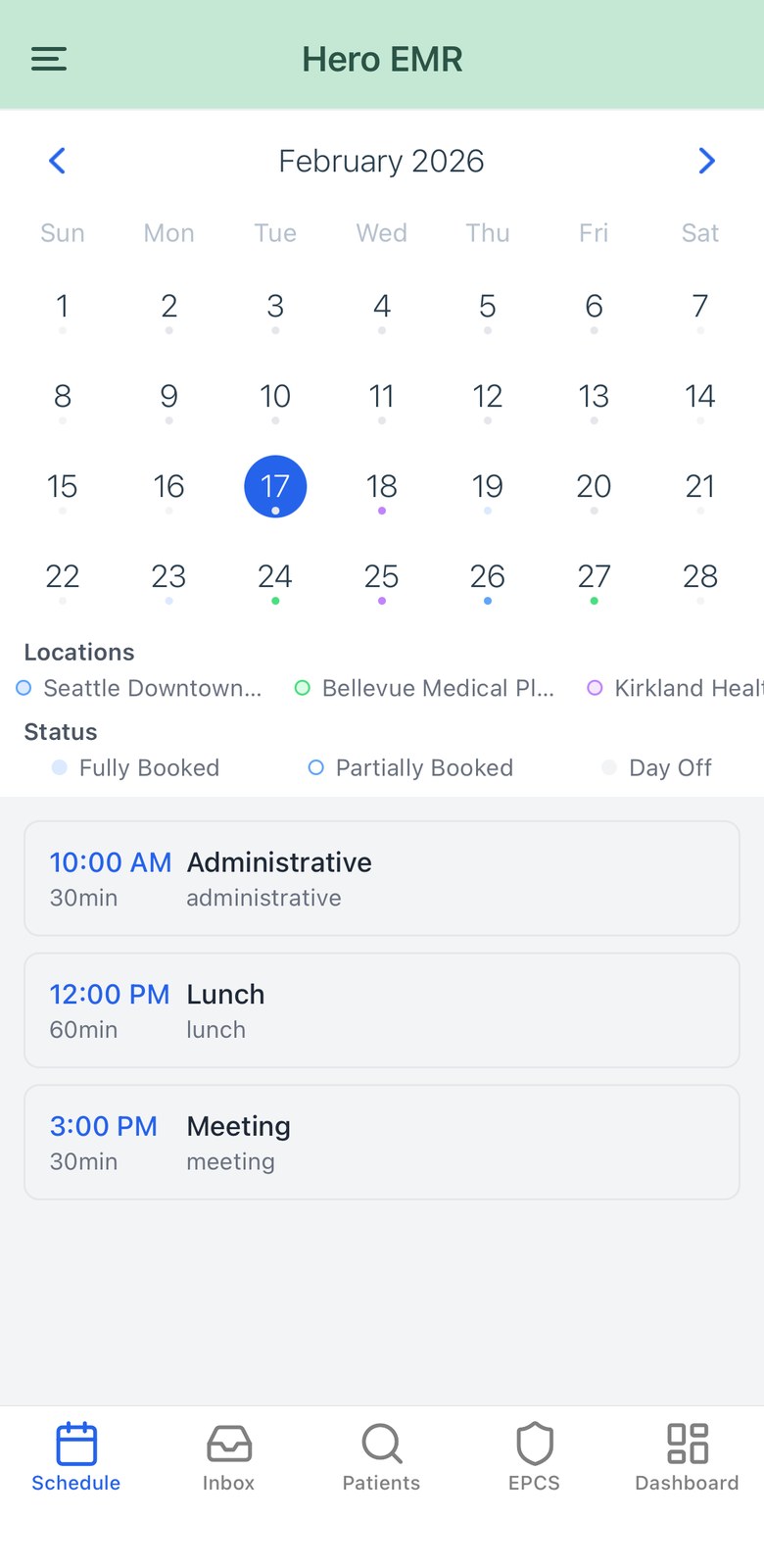
Every row carries the state of its encounter, not just the appointment — so the day reads as work, not as a list of names.
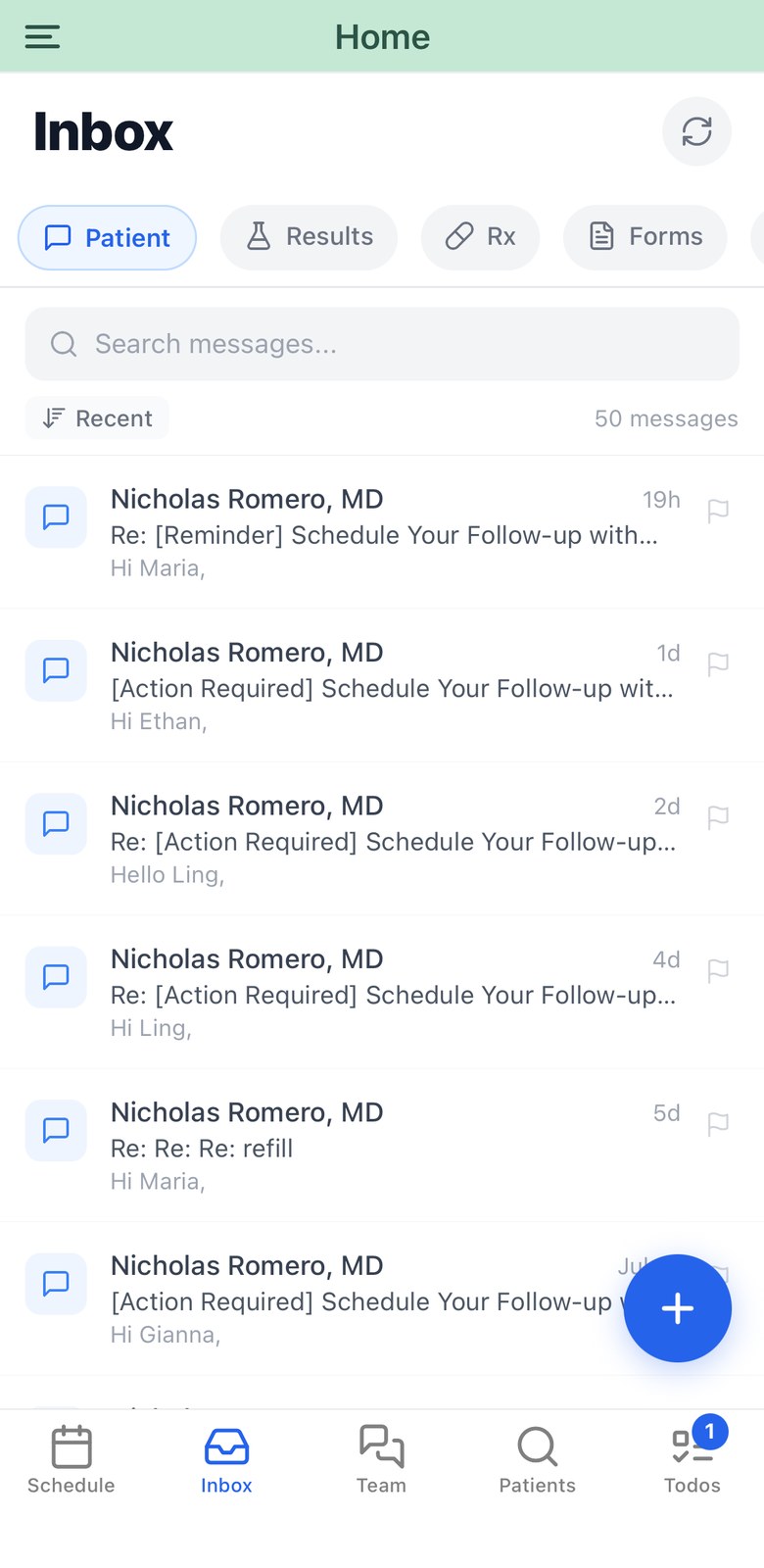
Patient threads, results, refills, forms, staff notes, referrals, faxes and inquiries — each with its own unread count, and each with the action that actually closes it.
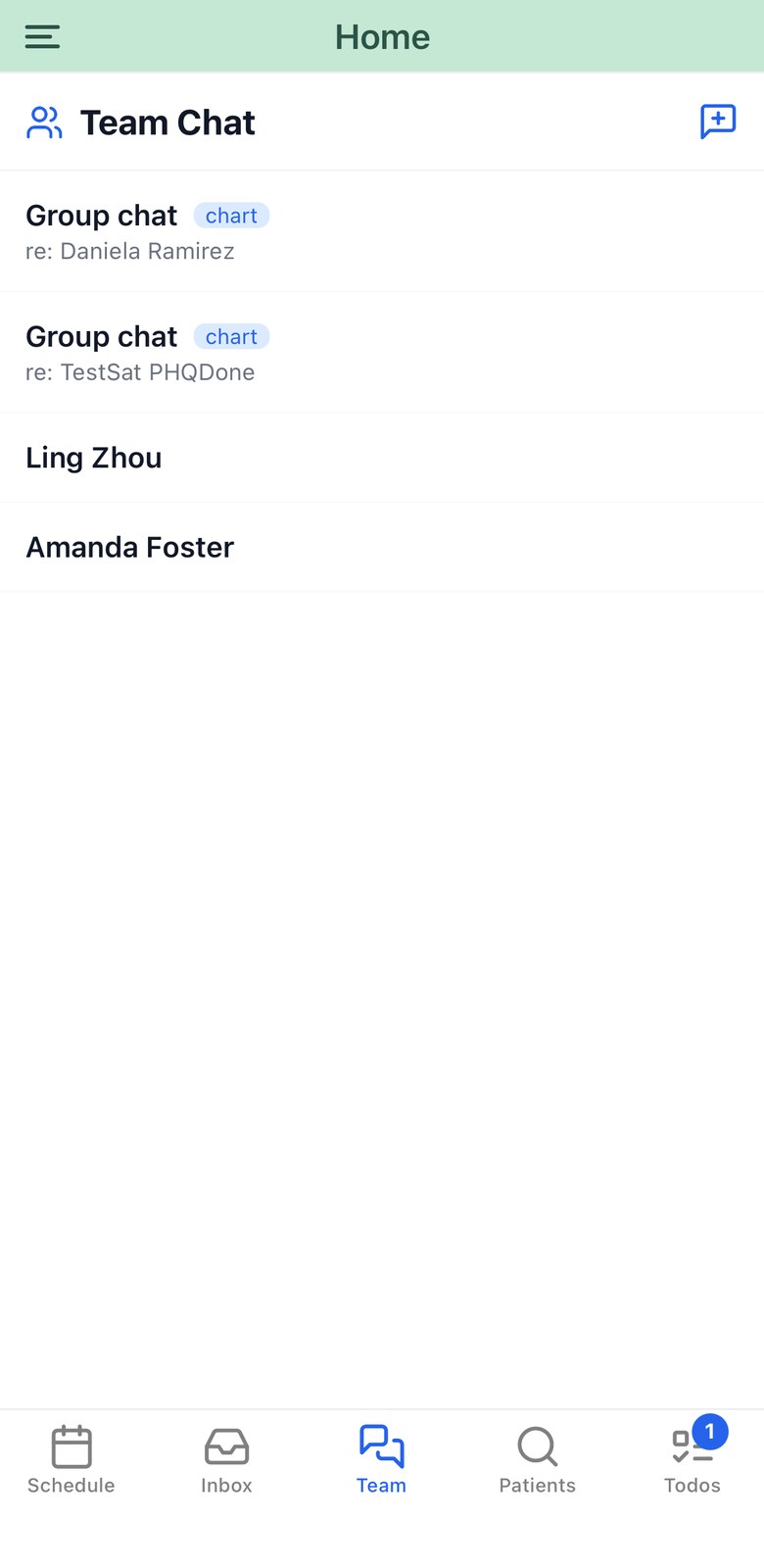
Direct and group messages with your staff, live, with urgent messages that break through as a banner wherever you are in the app.
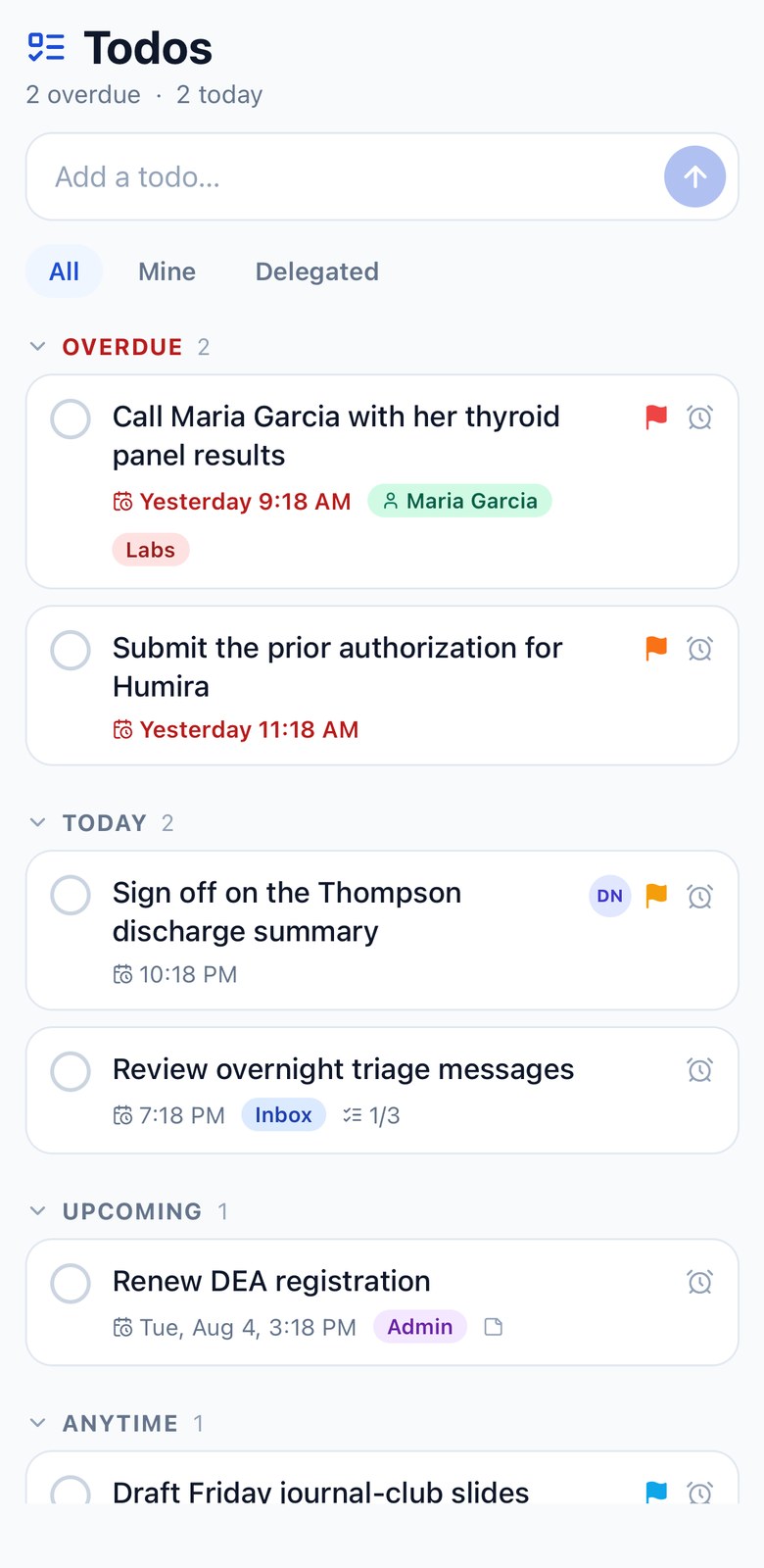
One org-wide todo list, live between the phone and the browser. Overdue, today, upcoming, snoozed — all bucketed in the practice's timezone.
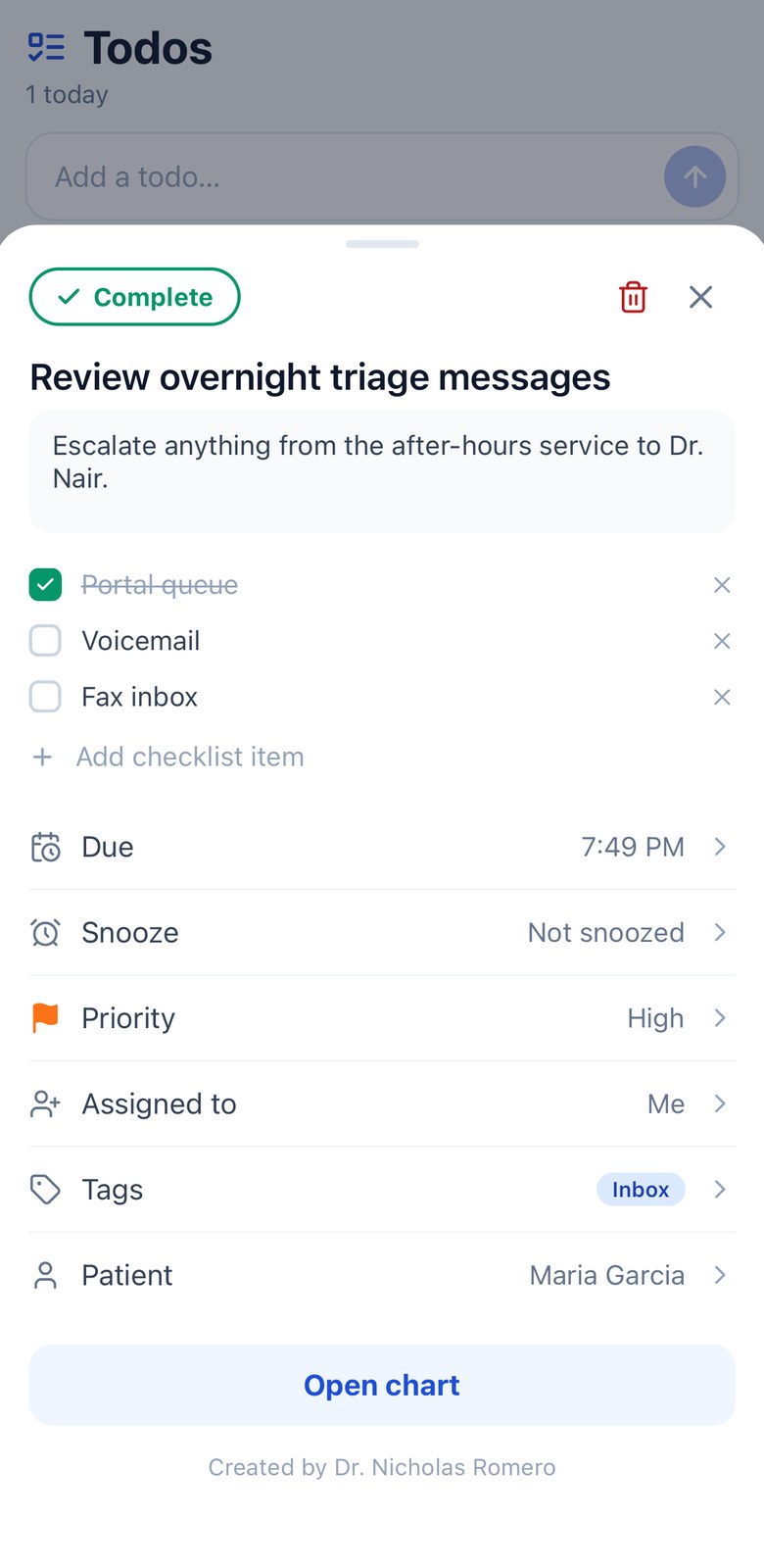
Open a task and it's a real record, not a line of text: notes, a checklist, priority, tags, who owns it, and which patient it belongs to.


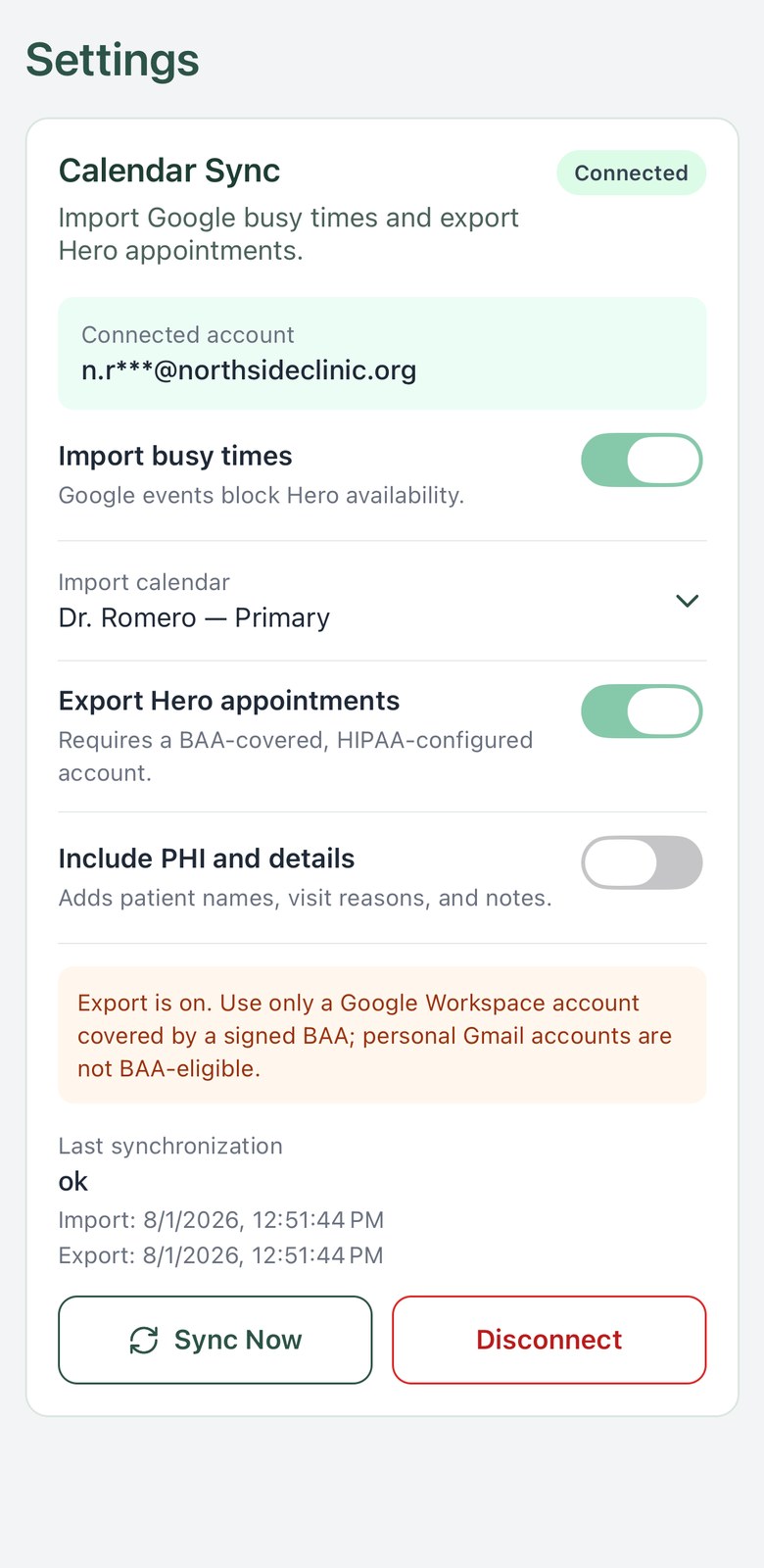
Connect Google Calendar or Outlook once. From then on your outside commitments block your Hero availability, and your Hero visits appear in the calendar you already live in.
Import and export are independent, per provider. Block your Hero availability from an outside calendar without ever pushing clinic data outward — or do both.
Exporting appointment details is a separate switch with its own acknowledgement. Hero tells you plainly that PHI will sit on the provider’s servers, and that this belongs on a BAA-covered Google Workspace or Microsoft 365 account — personal Gmail and Outlook.com accounts are not BAA-eligible.
An outside commitment shows up on the agenda as a red, non-clinical block. It can't be opened as a visit, and the month view marks the day so you see it coming.
Trigger a sync by hand and watch the schedule catch up. The settings screen shows the connected account, the last import, the last export, and any error worth acting on.

Open the encounter from the schedule and the full Hero note editor comes with it. Record the visit ambiently, dictate straight into the note, and sign — without opening a laptop.
Start recording and put the phone down. Audio uploads continuously in small chunks with retries, so a lift ride or a dead zone doesn't cost you the visit — you get a “weak connection, audio is cached” note instead of a lost recording.
A second microphone types what you say directly into the note, cleaned up by the same engine as the desktop's dictation — punctuation, casing and all — then inserted where your cursor was.
A phone call pauses the recording and offers to resume. Walk out of the room and a floating pill keeps the timer with you. If the app is killed mid-visit, the session is offered back to you the next time you open it.
Recoverable sessionsOn iPhone, the recording lives on the lock screen and in the Dynamic Island with a running timer — through “Transcribing”, “Writing note” and “Open Hero to finish your note”.
iPhone · iOS 16.2+Review and sign from the phone. Tap a visit that's already signed and Hero asks whether you meant to start an addendum, rather than quietly reopening a legal record.
Notes, labs, imaging and medications for any patient — plus prescribing with a sig builder, diagnosis search and pharmacy preferences. Photograph a wound or a document and it files straight into the chart.
EPCS signing asks for something you have and something you are. Hero makes that your enrolled phone and your face — no keyfob, no token to lose.

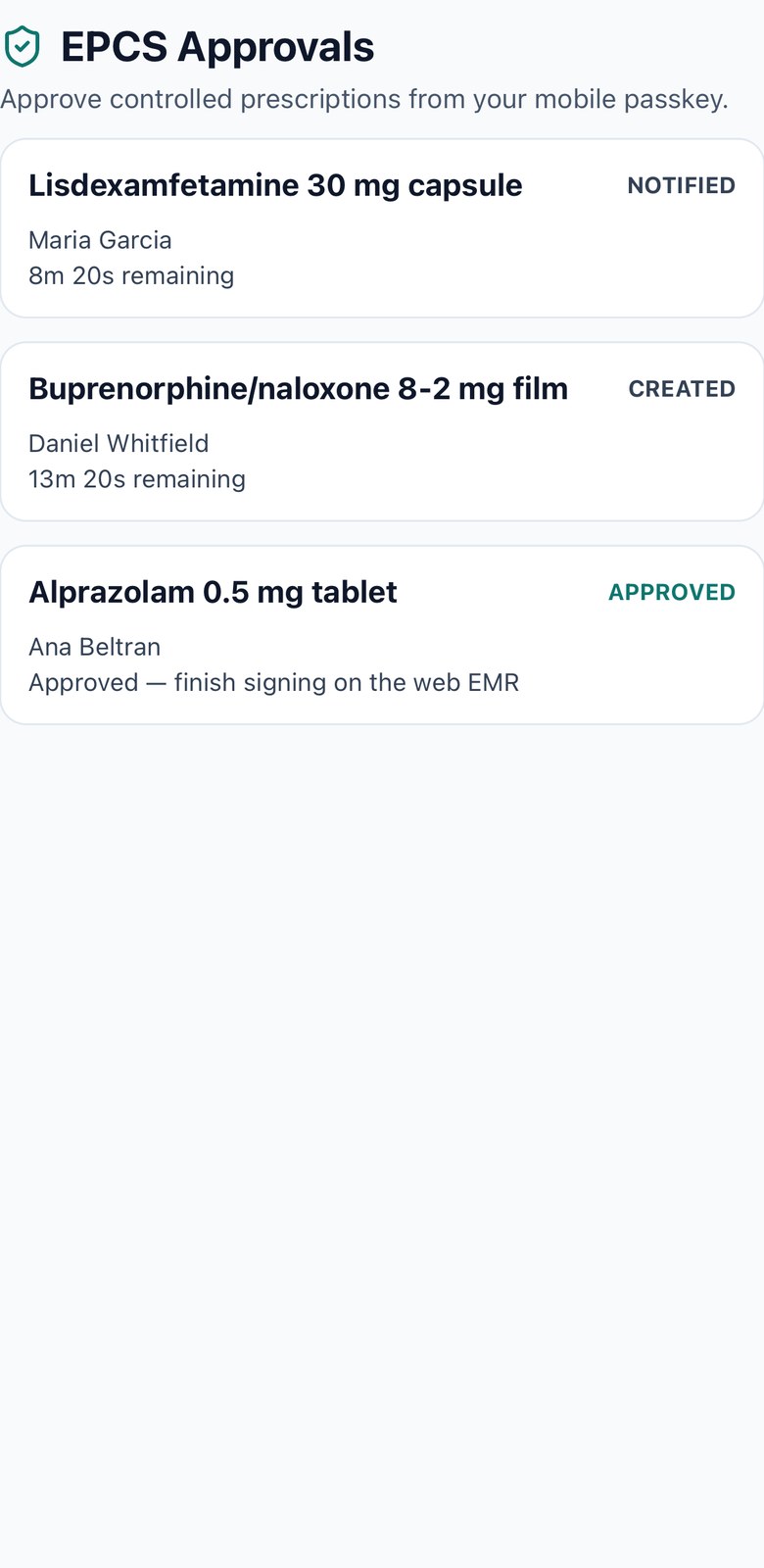
The request arrives as a notification. You see the drug, strength, directions, quantity, refills, schedule and the patient — then approve with Face ID, Touch ID or your device passcode.
A phone can't approve anything until it's been redeemed as an approved signing device with its own passkey. Enrollment status, approved devices and your primary device are visible in the app.
Write a controlled prescription on mobile and the app opens the signing session, waits for your approval, and only then transmits. Nothing leaves as a prescription until it's been signed.
A phone in a clinic is a phone that leaves the clinic. These are the controls that assumption produced.
Native WebAuthn on both platforms, backed by the device's own biometric or passcode. The credential never leaves the phone's secure hardware, and there is nothing to phish.
Clinical MFA by passkey or SMS, with the enforcement level set by your practice — off, report-only, a grace period, or strictly enforced. A web session can even be confirmed with the passkey on your phone.
Controlled-substance approval is bound to devices your practice has explicitly enrolled. A stolen password on an unknown phone approves nothing.
Anything queued locally — vitals waiting on signal, message drafts, trusted-device tokens — is held in the operating system's keychain, not in plain storage. A repo guardrail fails the build if that ever regresses.
Transcripts are never written to disk or to a log. Diagnostic logging is redacted and silent in release builds, and an automated check in the build pipeline enforces it file by file.
Capabilities are gated by your organization's policy and a minimum app version, evaluated fail-closed: if the answer is missing or malformed, the feature stays off rather than guessing.

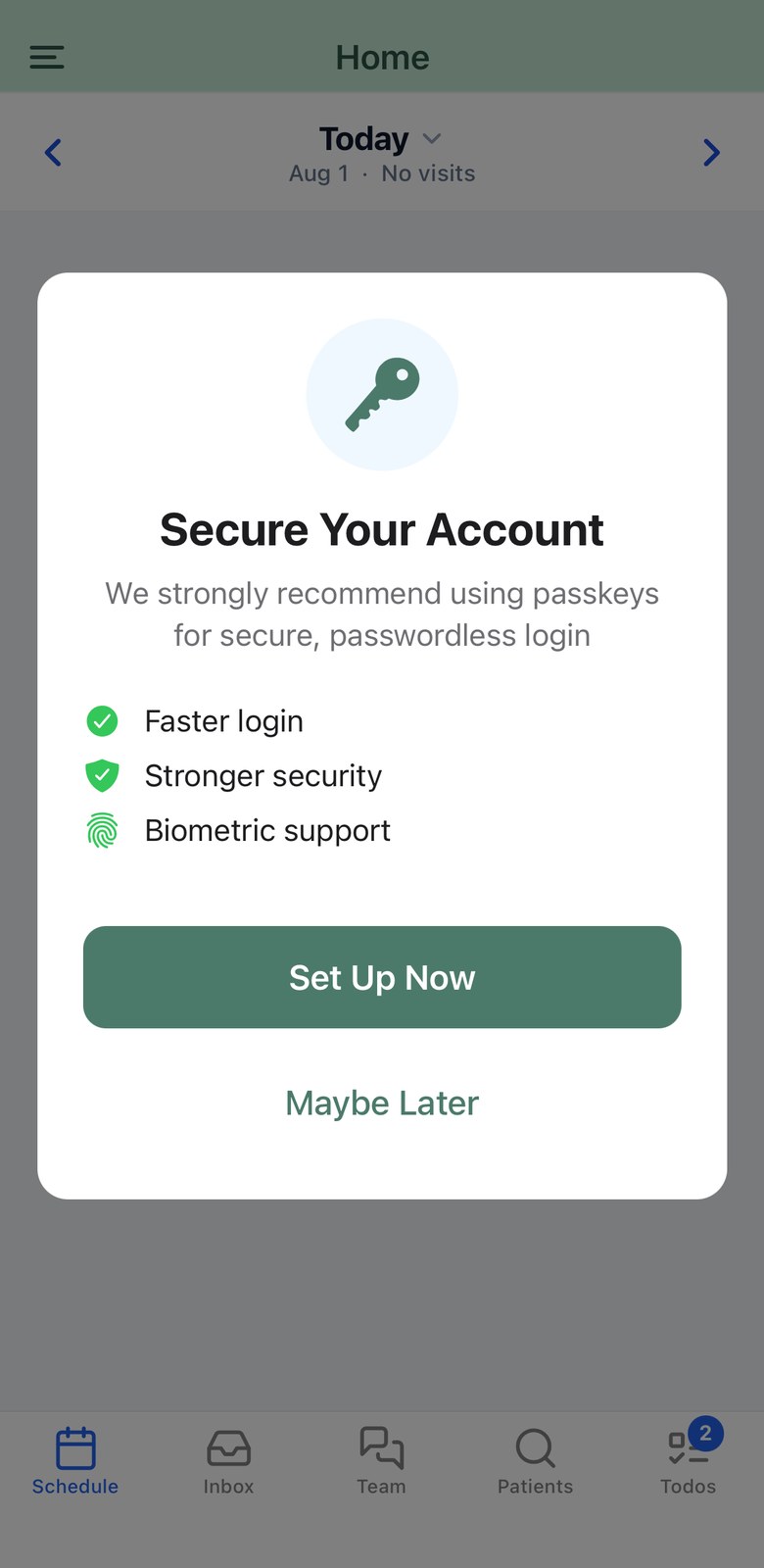
After the first sign-in the app offers a passkey rather than demanding one, so a practice can roll them out at its own pace — and a clinician who declines still gets two-factor by SMS.
From then on sign-in is Face ID, Touch ID or the device passcode. The credential is held in the phone's secure hardware, scoped to Hero, and cannot be replayed from anywhere else.
Hero EMR operates as a business associate under a signed BAA with every practice, and the app is built around that posture: server-dictated HTTPS origins, short-lived session tokens, per-organization scoping on every request, and an explicit acknowledgement before any feature copies patient detail to a third-party service. Compliance is a property of your practice's whole environment, not a badge on an app — talk to us about how Hero fits yours. Read the documentation →
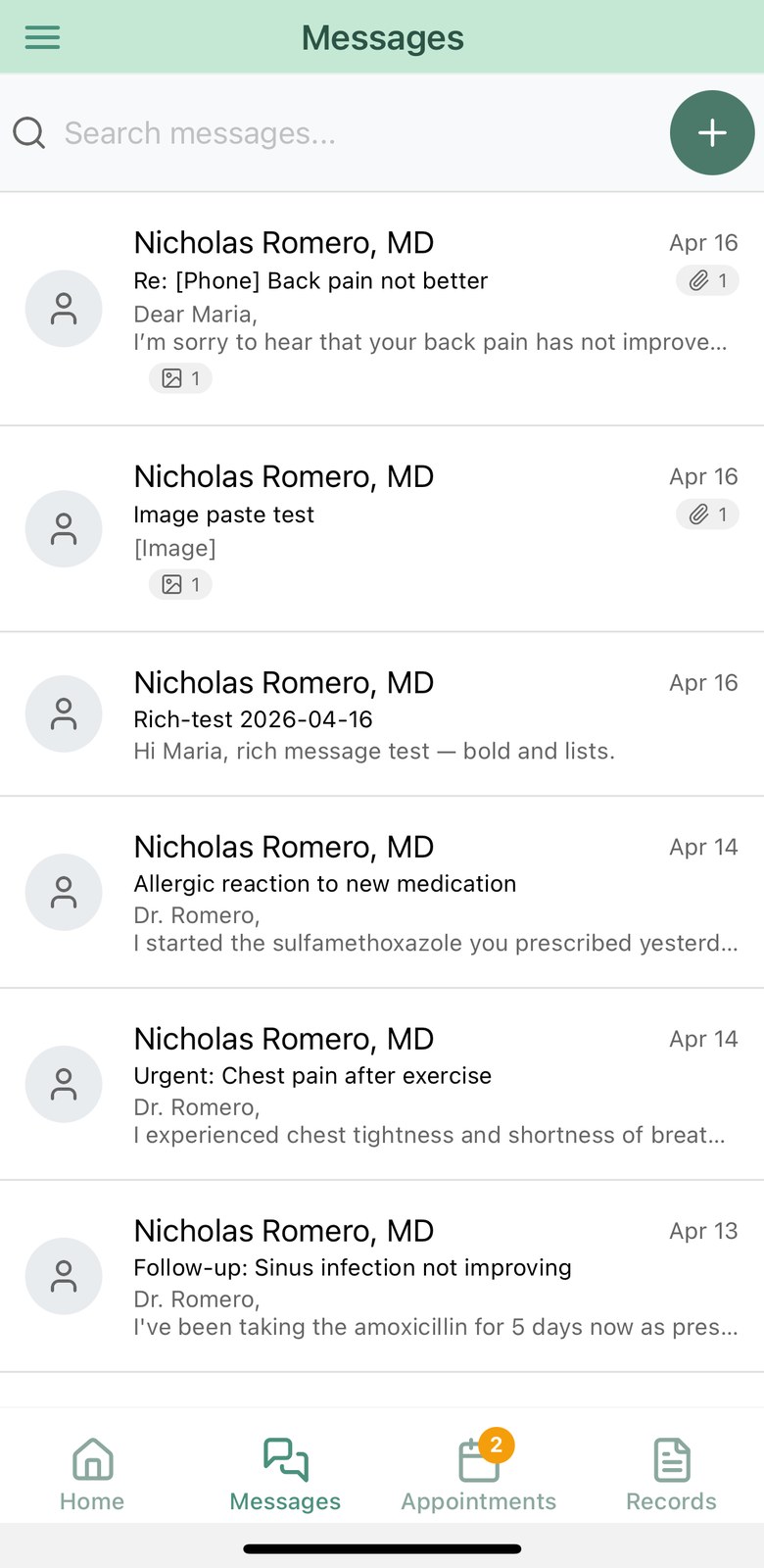
The same app your patients download becomes their portal — appointments, messages, results, bills, and the health data their phone and cuff are already collecting.

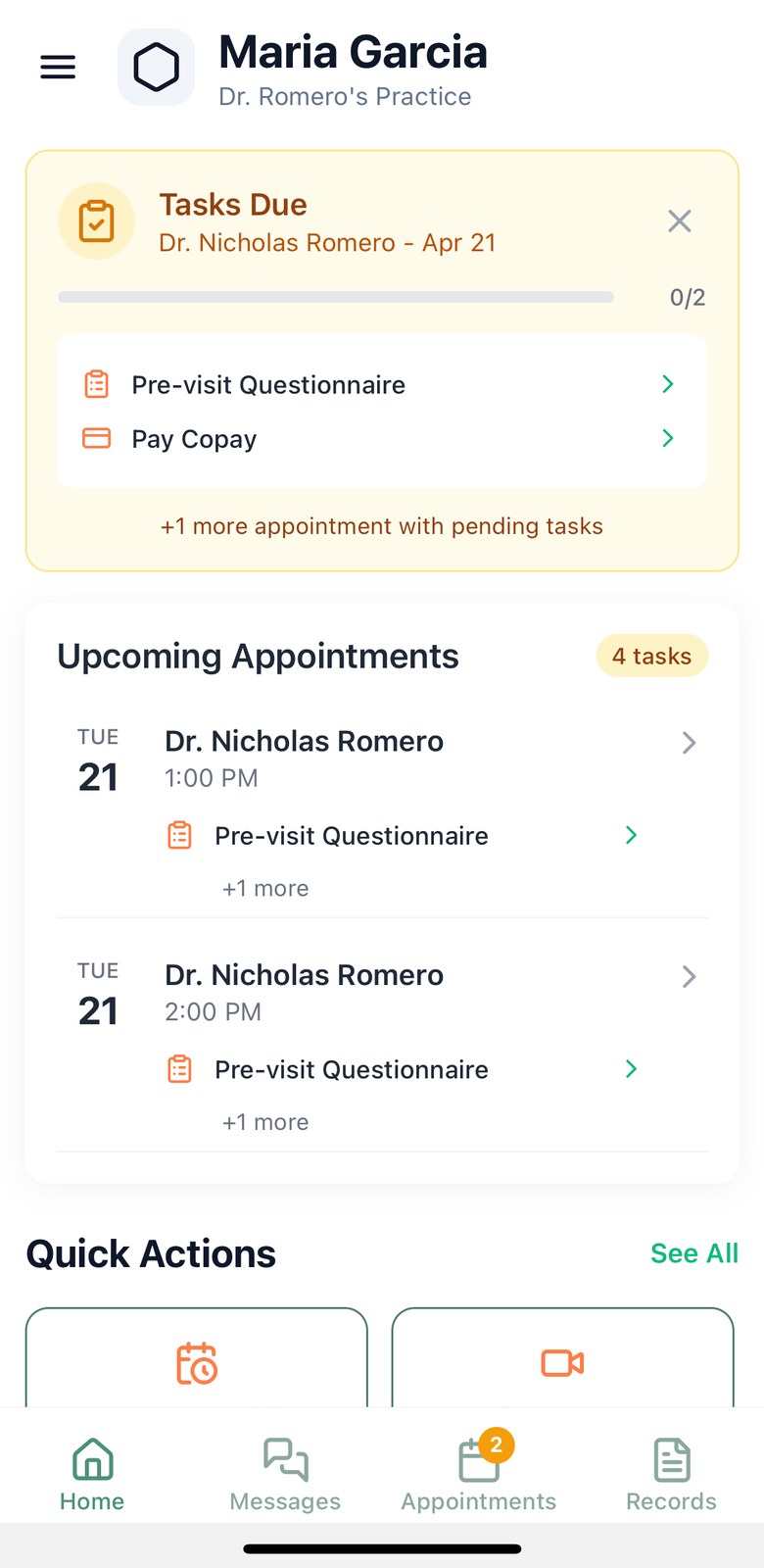
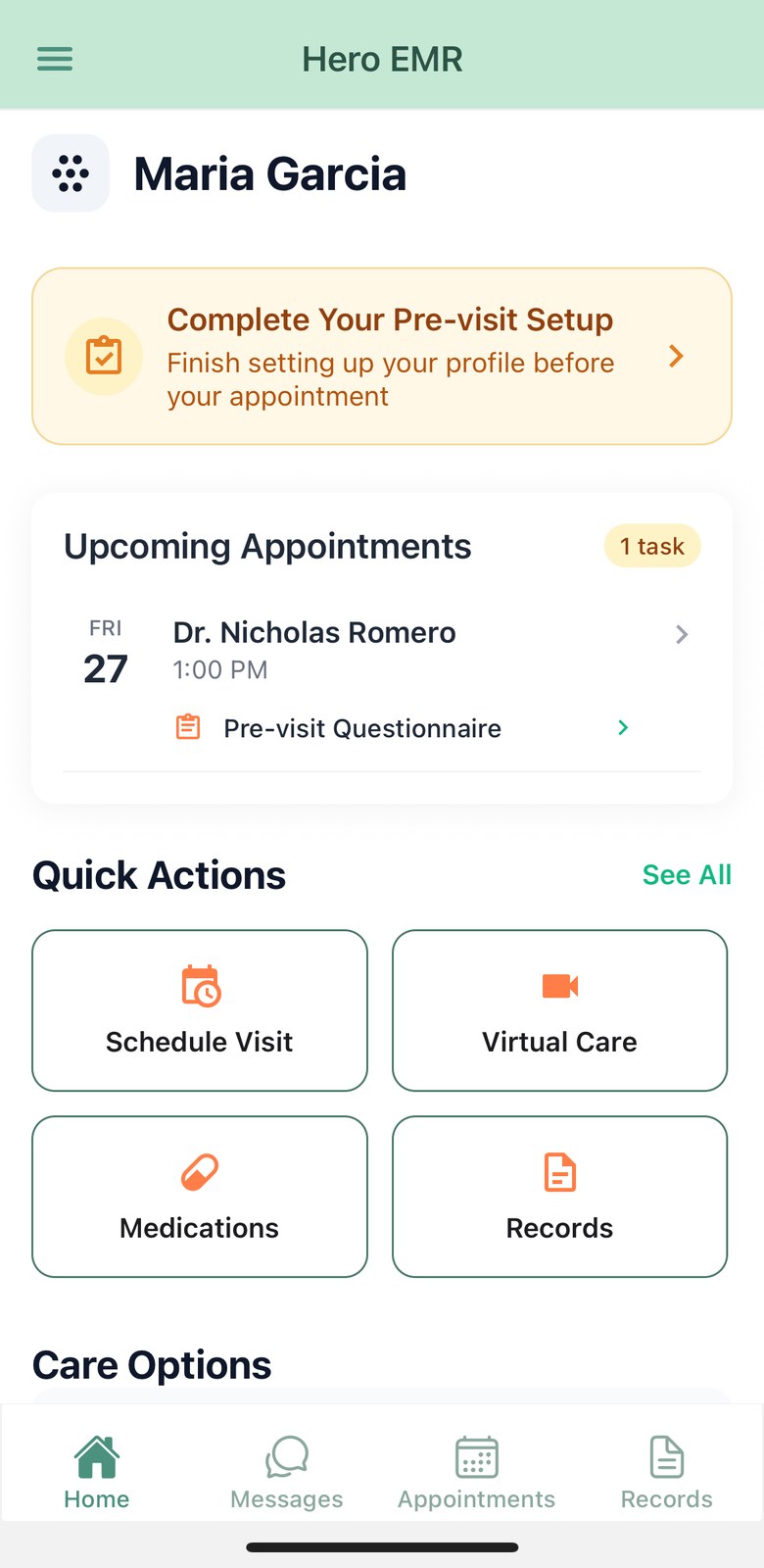
The home screen leads with what's next: the upcoming visit, the pre-visit tasks still outstanding, and a way to check in. Patients who can answer their own questions at 9pm don't ring your phone at 9am.
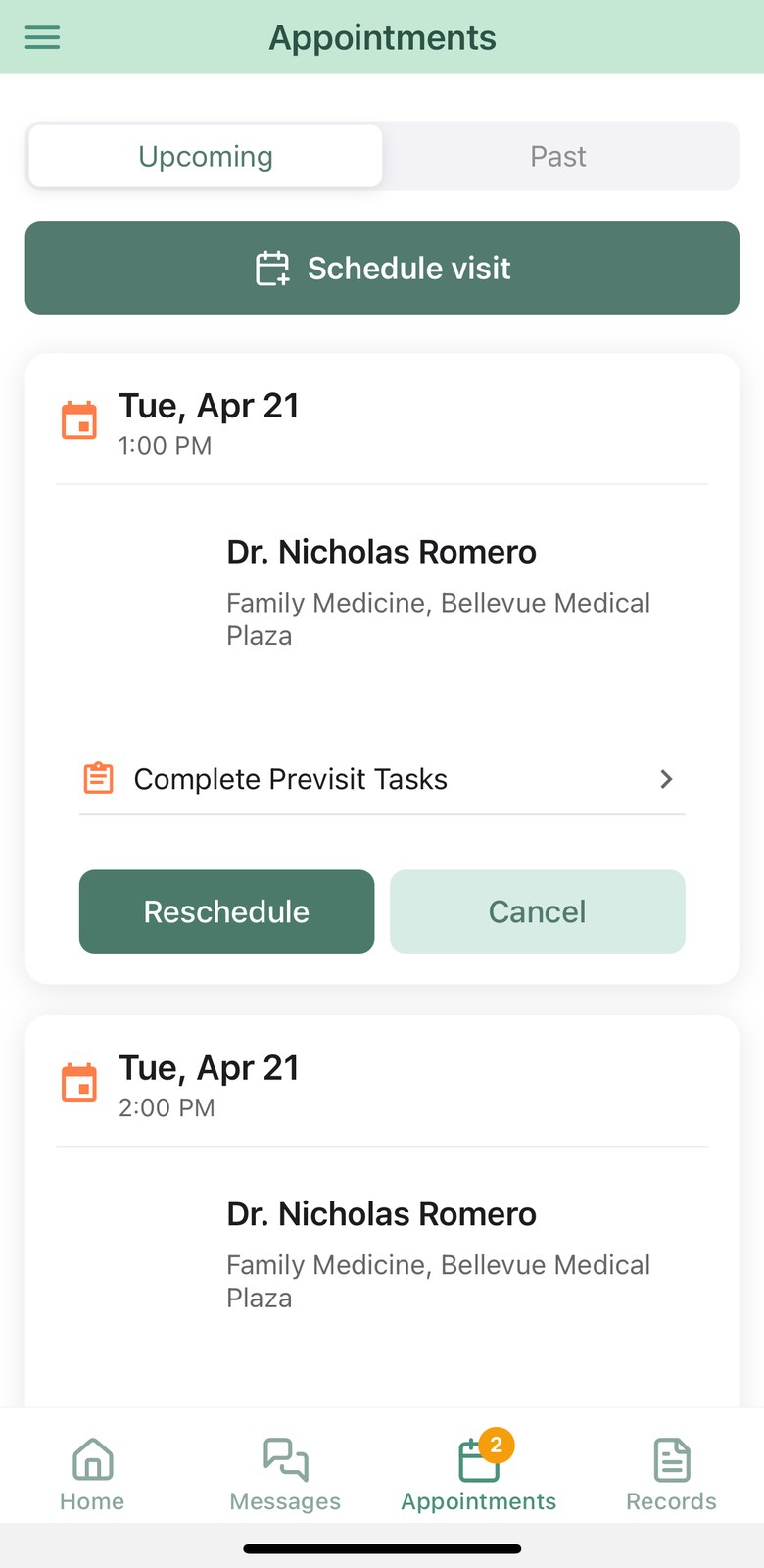
Appointments carry their own pre-visit work, so the questionnaire and the copay stop being something your front desk has to chase.
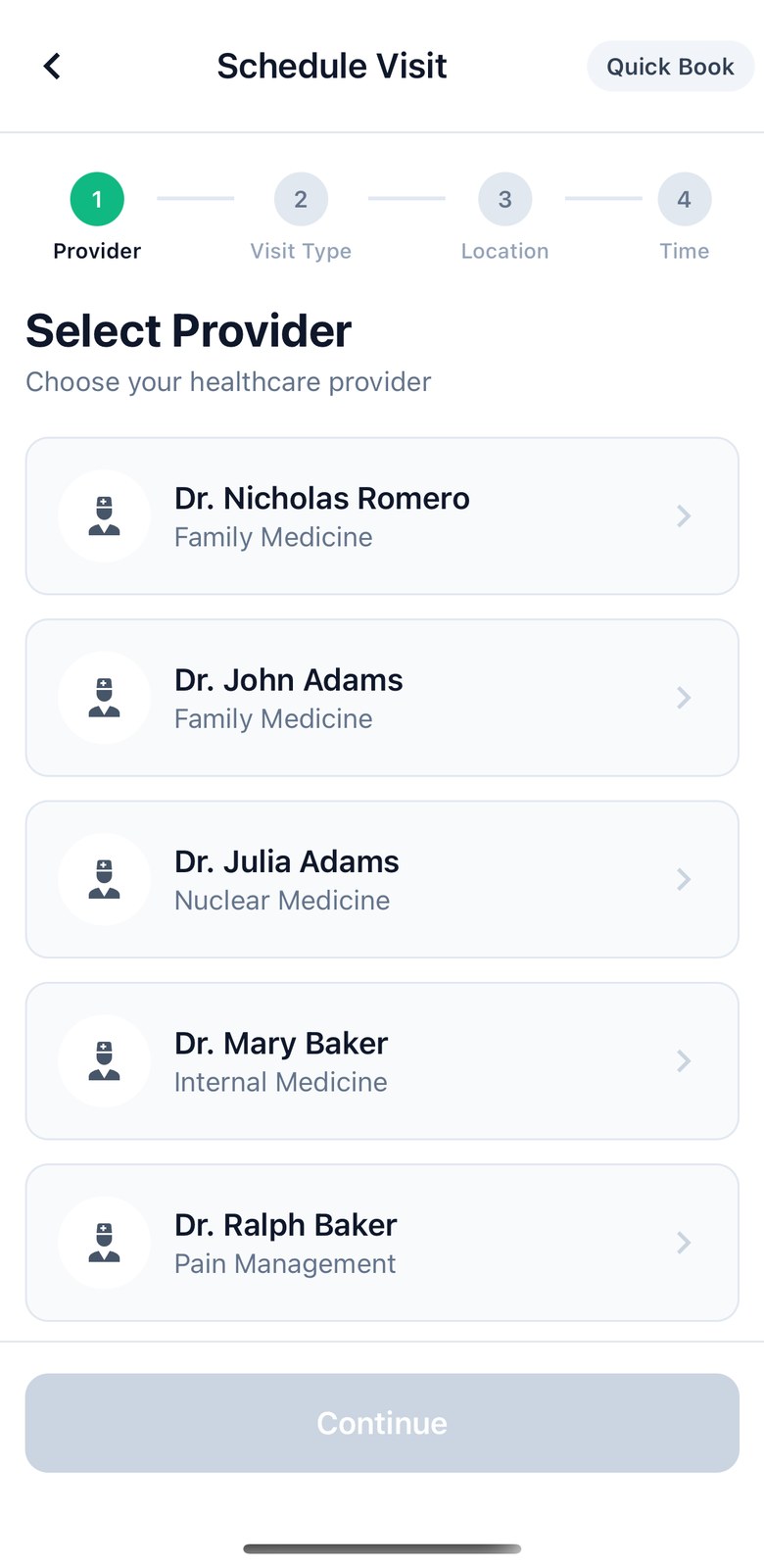
Four steps — provider, visit type, location, time — with a quick-book shortcut for patients who just want the next opening.
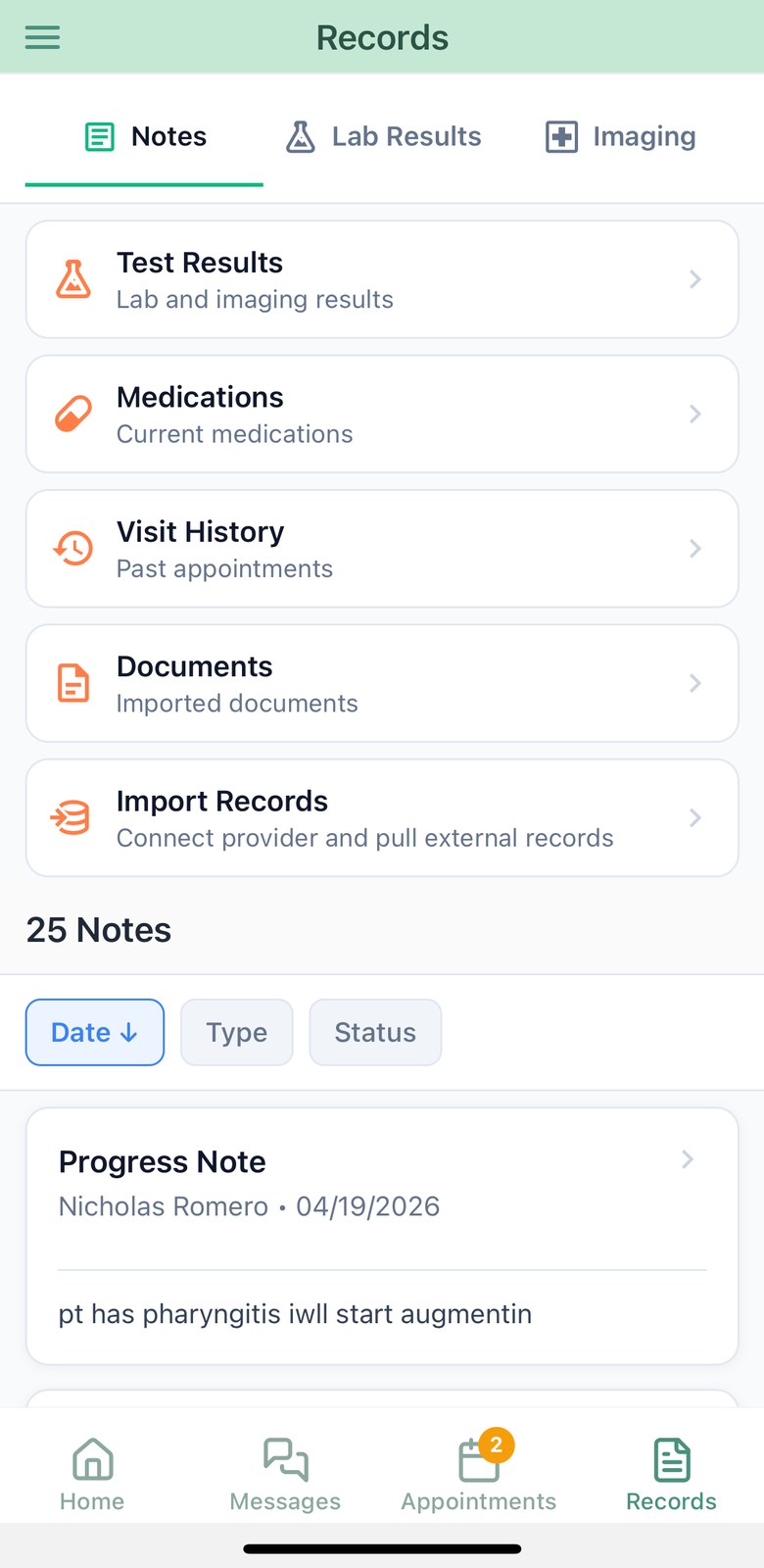
Notes, labs and imaging in one place — filterable, with the hub cards that lead to test results, medications, visit history and documents.
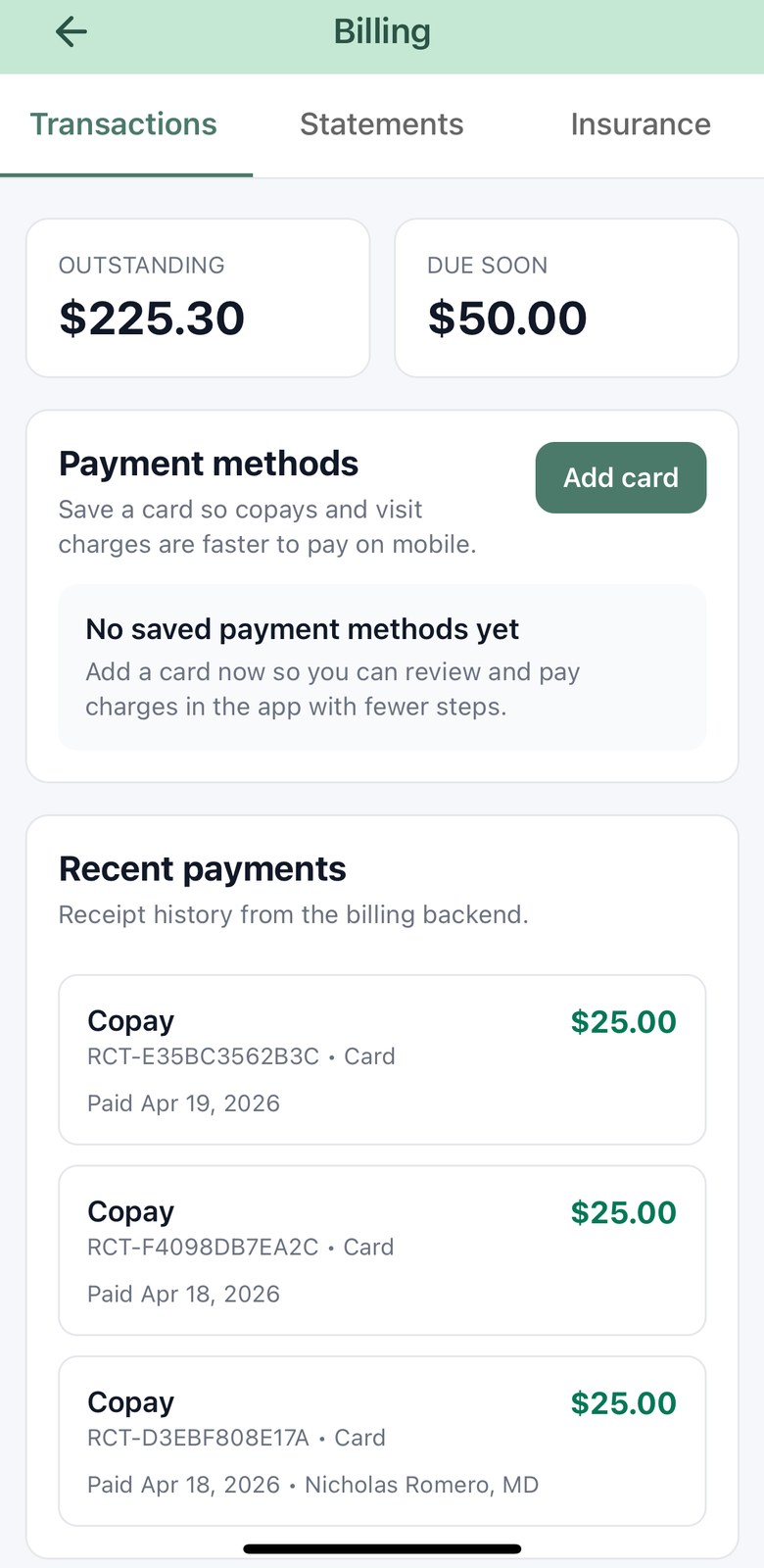
Balance, charges and receipts in one screen — and an insurance card the patient can update by pointing a camera at it.
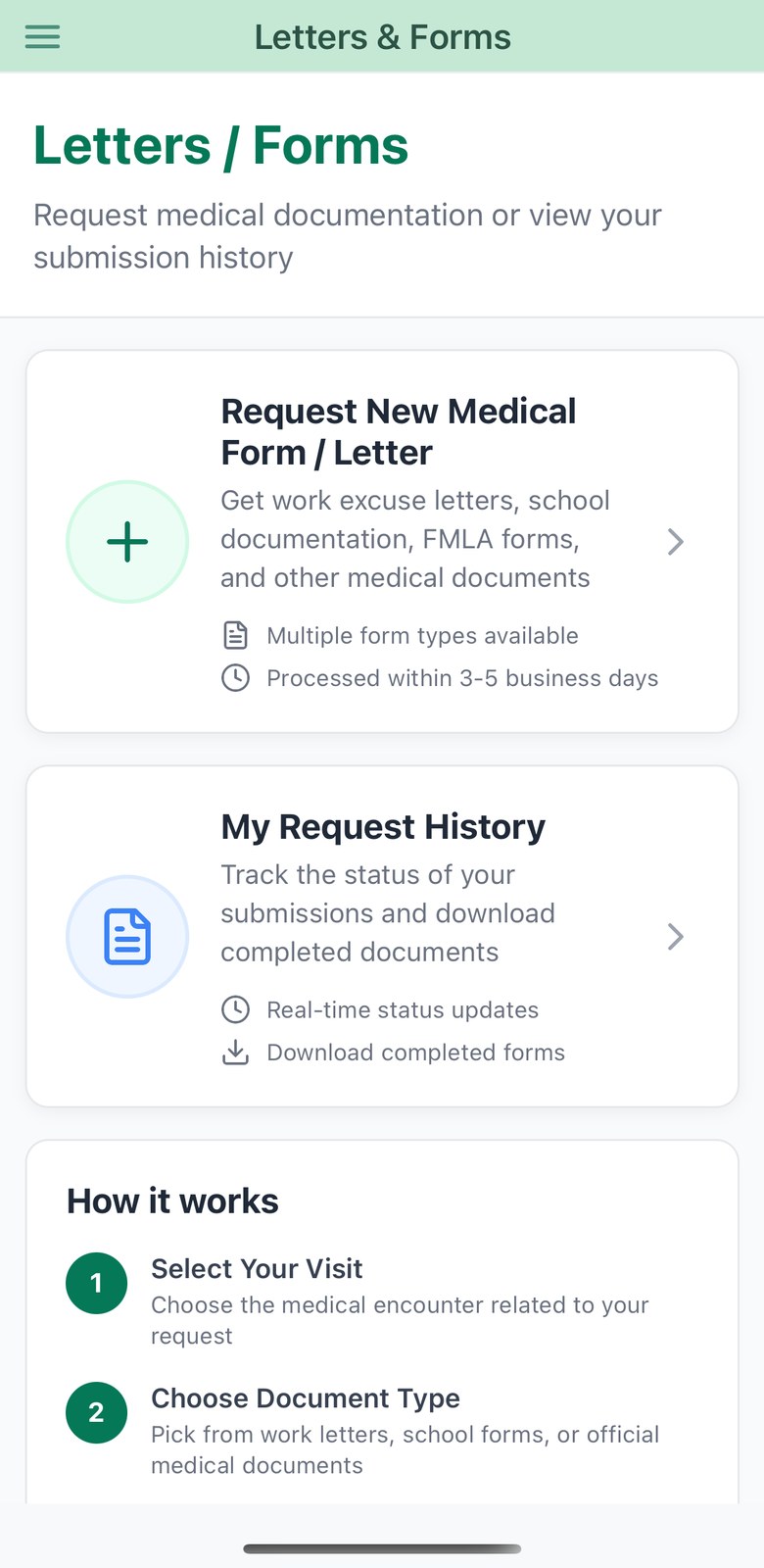
Work notes, school letters, your own template catalogue — or a PDF the patient uploads for you to complete.


Vitals flow into the chart from the patient's own devices — blood pressure, heart rate, weight, glucose, oxygen saturation, sleep, activity and more — with 7-day charts and a full history the patient can see for themselves.
Enabled per practiceWith permission, Hero reads 14 data types from Apple Health — and never writes back. The first connection brings 30 days of history; after that it tops up quietly while the app is open.
iPhonePair a cuff once and readings arrive on their own — systolic, diastolic, pulse, and the irregular-heartbeat flag the device raises. Hero speaks the standard Bluetooth blood-pressure profile, so it isn't tied to one brand.
iPhone & AndroidA measurement taken in a basement isn't a measurement lost. Readings queue on the device, de-duplicate, and upload when signal returns — with the patient able to see exactly what's pending.
Patients answer a guided pre-visit questionnaire and walk through their medication list in plain language. You get a structured summary — and an urgency flag if something in the answers warrants it.
Photograph an insurance card and the member ID, group, plan and copays are read off it. Photograph a medication bottle — or a whole printed list — and the medications come back structured, ready to confirm.
Patients connect to their previous health system — searching by name, or finding nearby providers by location — and import demographics, medications, allergies and notes, confirming what lands in their chart.
Epic · MyChartLabs with reference ranges, abnormal flags and trends over time. Imaging reports split into technique, findings and impression. Notes, visit history and documents, all in one place.
Request a work or school letter against a specific visit, complete assigned pre-visit paperwork with a signature on the glass, and track every request through to a downloadable PDF.
One download, two experiences. What each person sees is decided by who they are and what your practice has turned on.
My Hero is free on the App Store and Google Play, and included with every Hero EMR practice. Your patients get the portal in the same download.